Hero Background
A Complete Guide for Modern Traders

Commodity Trading India

From precious metals like gold and silver to energy products such as crude oil and natural gas, commodity markets offer access to a wide range of assets that respond to economic, geopolitical, and market-driven events.

Scroll
Value Proposition

Trade Commodities with Confidence

Trade precious metals, energy resources, and agricultural products to diversify your portfolio. We offer easy commodity trading.

Low Brokerage
Fastest Payout
24/7 Support
60X Holding
Access to Global Commodity Markets
Competitive Commodity Pricing
Fast & Reliable Trade Execution
Secure & Transparent Trading
Live Commodity Market Insights
Expert Customer Assistance
Community

Join the ApexTrade community to avail the benefits!

Improving people's financial lives through strategic planning, high-frequency trading, and automated earning systems.

Global Access
24/7 Support
150K+ Members
Primary Raw Materials

What is Commodity Trading?

Commodity trading is the structured exchange of standardized physical raw assets and primary resources executed through centralized clearing networks.

Unlike traditional equity structures that derive valuation from corporate performance, commodities trade purely on global demand equilibriums, systemic inventory balances, and structural macro regimes. Instead of managing physical logistics, modern marketplace operators deploy derivative pipelines to capitalize on underlying spot fluctuations and run strategic inflation fences.

Regulated Clearing NodesMCX / NCDEX Standard
Precious Metals Portfolio✓ Active
Energy Derivative Pipelines✓ Active
Industrial Base Blocks✓ Active
Agro-Sourced Contracts✓ Active
Market Topology

Understanding the Commodity Market in India

The Indian domestic clearing ecosystem runs via highly standardized contracts to guarantee transparent execution parameters across core macro sectors:

Precious Metals

XAU / XAG
  • Gold (Standard & Mini)
  • Silver Contracts

Base Industrial Metals

HG / AL / ZN
  • Copper Wire
  • Zinc
  • Aluminium
  • Lead Delivery

Energy Architecture

CL / NG
  • Crude Oil Light Sweet
  • Natural Gas Micro

Agricultural Contracts

AGRO / COM
  • Cotton Long Staple
  • Soybean
  • Turmeric / Jeera
  • Guar Seed Pools
Inflow Vector Dynamics

Why Commodity Trading India is Growing Rapidly

As algorithmic access layers mature, domestic professional operators utilize commodity books to execute advanced systematic balance plays.

// 01Non-Correlated Portfolio Diversification

Commodity asset flows historically trace performance corridors decoupled from spot equities, creating solid hedging boundaries.

// 02Structural Inflation Shields

Hard raw goods absorb fiscal expansion metrics naturally, scaling structural asset values during intense CPI adjustments.

// 03High Liquidity Velocity Profiles

Heavyweight tracking pools like Gold and Crude ensure deep book density, suppressing unnecessary slippage spikes.

// 04Global Asymmetry Capturing

Cross-border supply bottlenecks directly influence domestic clearing curves, opening up highly predictable directional trends.

// 05Extended Trading Window Segments

Commodity clearing networks remain operational deeper into late evening blocks, unlocking massive operational scheduling agility.

Execution Styles

Types of Commodity Trading

Intraday Momentum TradingPositions completely squared inside the session to safely isolate capital from overnight macro gaps.
Positional Macro StrategyHolding directional contract tranches across multi-week arcs to harvest systemic supply deficits.
Standardized Futures ContractsLeveraging structured central agreements to lock down precise forward pricing metrics for underlying spot assets.
Enterprise Hedging ArchitectureDeployed by industrial entities to isolate balance sheets from adverse material pricing fluctuations.
Price Determinants

Factors That Drive Prices

Global Supply vs Demand MetricsInventory print releases, structural output adjustments, and broad scale industrial burn rates.
Systemic Macro-Economic ClimesVelocity changes across industrial manufacturing sectors and broad industrial capacity index marks.
Geopolitical Disruption NodesCross-border logistical trade parameters, production barriers, and macro embargo frameworks.
USD Valuation FluctuationsAs major commodities trade internationally in USD, localized currencies dictate absolute purchasing power adjustments.
Micro-Climatic Weather VarianceDirect volatility trigger for agricultural blocks via season disruptions or altered logistics flow metrics.

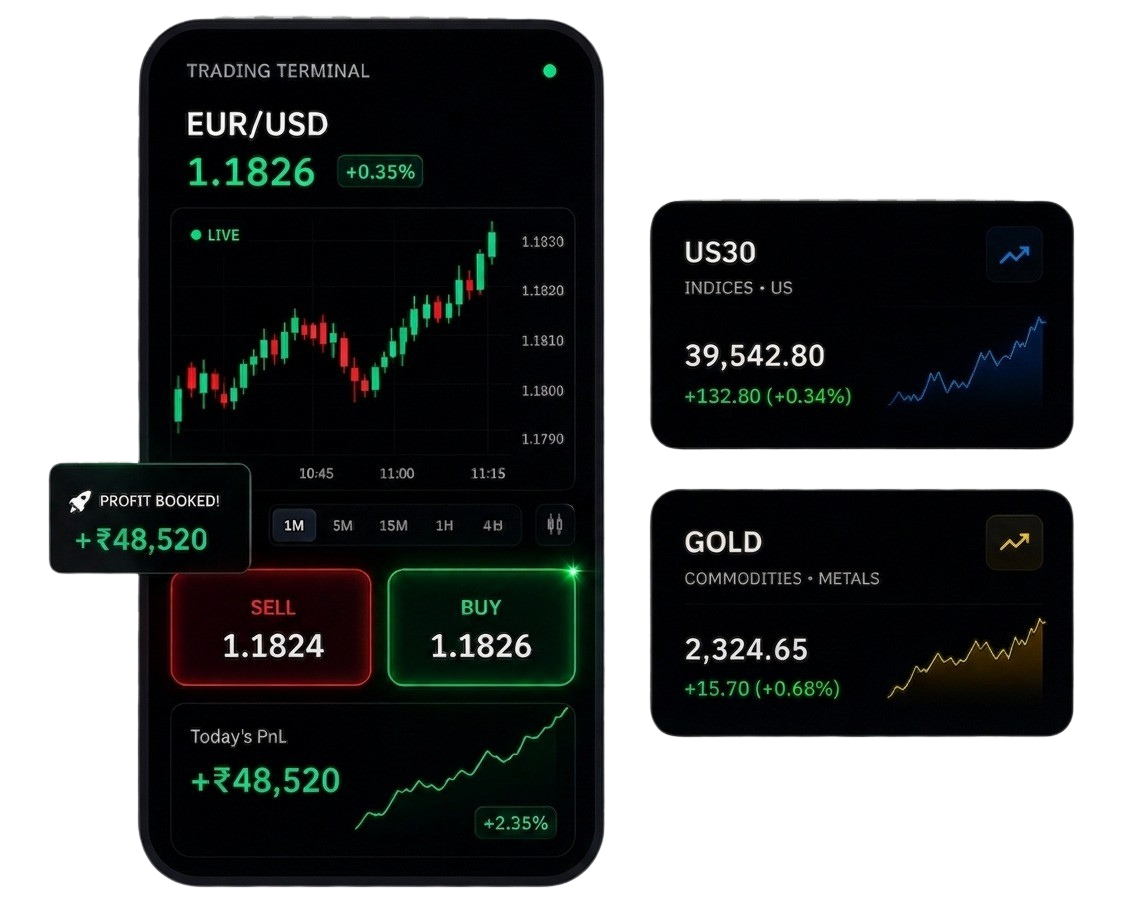
Access Advanced Raw Material Pipelines

Deploy strategy models directly into ultra-responsive domestic commodity exchange books. Utilize low-latency derivative execution matrices backed by institutional-tier risk parameter analysis.

Market Comparison Matrix

Commodity Trading vs Stock Trading

While both deployment environments process digital instruments, their underlying clearing dynamics, valuation drivers, and structural risk parameters differ fundamentally.

Structural FeatureCommodity TradingStock Trading
Asset ClassificationStandardized physical raw resources, energies, and bulk goods.Fractional corporate equity shareholdings and corporate titles.
Primary Valuation DriversGlobal aggregate supply bottlenecks, real-world inventories, and macro regimes.Corporate balance sheet trajectories, revenue metrics, and industry tailwinds.
Portfolio Diversification RoleDirect non-correlated exposure to tangible assets; structural inflation fence.Direct exposure to localized or global macro corporate expansion vectors.
Volatility ArchetypesIntense session swings heavily dictated by geopolitical actions and trade logistics.Varying momentum arcs tied to business operations and index sentiment.
Available Target ScopesPrecious and industrial base metals, global energies, agricultural contracts.Publicly listed enterprises cataloged by sectors and market capitalizations.
Onboarding Protocol

How to Start Commodity Trading

Initialize multi-market clearing capability using our standardized, regulatory-compliant execution provisioning lifecycle.

Step 01

Open a Trading Account

Select a compliant trading infrastructure provider optimized for native multi-exchange derivative connectivity.

Step 02

Complete Verification

Submit KYC documentation modules to satisfy statutory domestic compliance parameters.

Step 03

Fund Your Account

Inject raw ledger trading capital aligned with your planned risk buffer allocations and exposure parameters.

Step 04

Research the Market

Analyze real-time inventory balances, seasonal factors, and geopolitical headlines prior to routing capital.

Step 05

Execute Trades

Deploy your technical or quantitative alpha algorithms and actively monitor session margin profiles.

Exposure Control

Risk Management in Commodity Trading

Leveraged environments expose capital pools symmetrically. Long-term performance survival correlates directly to strict technical perimeter boundaries.

Hard Stop-Loss ConfigurationsAutomated liquidation parameters deployed instantly to enforce absolute trade exit rules.
Dynamic Position Sizing ModelsSizing asset allocations as a fixed micro-percentage of overall portfolio net asset value.
Cross-Sector DiversificationSpreading operations across uncorrelated classes like precious metals, energies, and base modules.
Macro Catalyst TrackingContinual analytical scanning of inventory print data logs and global monetary policy releases.
Apex Infrastructure

Why Choose Apex Trade for Commodity Trading India?

The Apex Trade infrastructure stack routes strategy models straight into primary domestic clearing blocks with sub-millisecond efficiency.

Multi-Market Access Portals
Real-Time Micro Tick Monitor
Advanced Math Risk Modules
Ultra-Fast Liquidity Pipelines
Ergonomic Order Configuration
Secure Institutional Settlement
Whether you are exploring commodity asset flows for the first time or deploying heavy automated algorithmic execution pipelines, Apex Trade equips you with the low-latency parameters required to capture modern macro alpha.

Scale Your Multi-Asset Execution Matrix

Seamlessly toggle allocation lines between corporate equity books and high-liquidity commodity derivative pools on an institutional-tier platform designed for elite trading control.

SUPPORT CENTER

Frequently Asked Questions

Learn the basics of commodity trading, understand popular commodities in India, trading regulations, capital requirements, and how beginners can get started.

Commodity trading involves buying and selling raw materials such as gold, silver, crude oil, and agricultural products to benefit from price movements in the market.

Yes. Commodity trading is conducted through regulated exchanges and follows established market regulations.

Gold, silver, crude oil, natural gas, copper, and agricultural commodities are among the most actively traded.

Yes. Beginners can start by learning market fundamentals, practicing risk management, and using a reliable trading platform.

The required capital varies depending on the commodity, trading strategy, and risk management approach.